
What is bathroom leak water damage?
Bathroom leak water damage is damage to floors, walls, ceilings and cabinets caused by a toilet, shower, tub, sink or the water lines that feed them. Some bathroom leaks are sudden, like an overflowing toilet or a burst supply line. Many are slow, like a worn wax ring or a cracked shower pan, and those often do more damage because they go unnoticed.
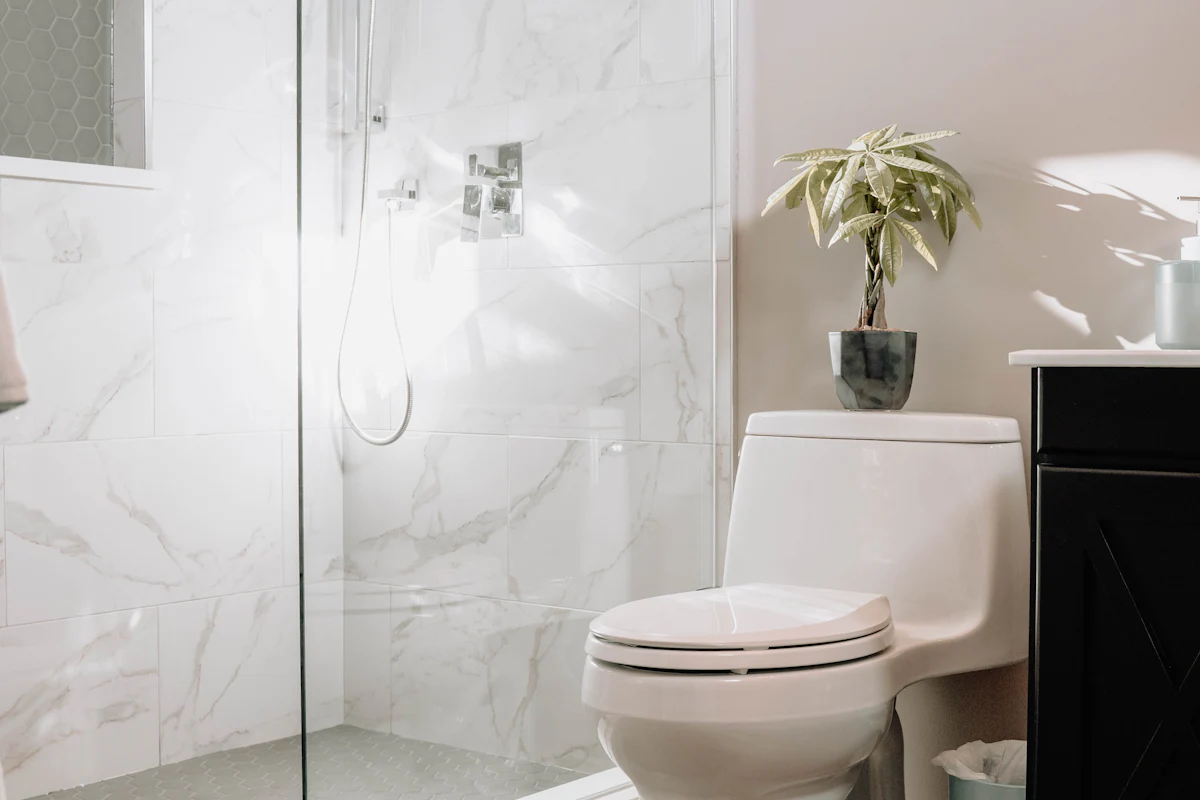
Common sources of bathroom water damage
- Toilet overflows from a clogged bowl or a blocked drain line
- Toilet supply lines and fill valves that split or stick open, running clean water onto the floor
- Failed wax rings under the toilet, which let water seep into the subfloor every time it's flushed
- Shower pan leaks, where water gets past the tile and grout into the pan and leaks through it
- Tub drain and overflow gaskets that let water into the space under the tub
- Shower valves and plumbing leaking inside the wall
- Vanity supply lines and drain traps leaking into the cabinet base
- Failed caulk and grout at tub and shower edges, letting water into the wall
Is toilet overflow water clean or contaminated?
The source decides how the cleanup is done. Water from the tank or supply line is clean water (Category 1). Overflow from the bowl with urine is treated as Category 2. Overflow with feces, or water that backed up from the sewer line, is Category 3. Category 3 water means porous materials it touched, such as carpet, pad and the bottom of drywall, are removed rather than dried. If the overflow came from a blocked sewer line, see our sewage backup cleanup page, and read our guide to water damage categories for the full definitions.
Signs of a hidden bathroom leak
- A soft, spongy or uneven floor around the toilet or tub
- Loose, cracked or hollow-sounding floor tiles
- Peeling paint, swelling baseboards or stains on the wall behind the shower
- A stain or drip on the ceiling below an upstairs bathroom
- A musty smell that doesn't clear with ventilation
- A swollen or crumbling vanity cabinet floor
- Gaps in caulk or grout where the tub or shower meets the wall
What to do right away
- Stop the water. Every toilet has a shutoff valve on the wall behind it. Turn it clockwise. Sinks have valves under the vanity. For a shower or tub leak, stop using it.
- Don't flush or run drains if the overflow came from a blocked drain, until the line is cleared.
- Stay out of contaminated water without gloves and boots, and keep children and pets out of the room.
- Check the room below if the bathroom is upstairs, and keep people out from under a sagging ceiling.
- Photograph the water and the source before cleanup. Your insurer will want to see it.
How we restore bathroom water damage
- Identify the source and water category. That determines what can be dried and what must be removed.
- Extract standing water from the floor and any carpet in nearby rooms.
- Find where the water went. Moisture meters and thermal imaging show water under tile, inside walls, under the tub and in the ceiling below.
- Remove what can't be saved. Wet baseboards, the bottom of drywall, vanity bases and contaminated materials come out. When needed, the toilet is pulled so we can dry and inspect the subfloor.
- Clean and sanitize if the water was contaminated.
- Dry the structure. Dehumidifiers and air movers run until readings reach a dry standard. Our structural drying page explains the process.
- Repair. Drywall, baseboards, flooring and cabinet parts are replaced. See water damage repair.
The leak itself, whether a wax ring, a supply line, a valve or a shower pan, is repaired by a plumber or tile contractor. We tell you which trade you need and share our moisture readings with them.
Upstairs bathrooms
In two-story homes, a bathroom leak often shows up first on the ceiling of the room below. The water can travel along joists before it appears, so the stain may not be directly under the bathroom. We dry both the bathroom floor and the ceiling and walls below, and check the space between floors, which holds water longer than either surface.
Slow leaks and mold
Slow bathroom leaks are one of the most common places we find mold, because the water stays inside a wall or under a floor for weeks. If you smell mustiness or see spotting, our page on mold remediation after water damage explains how drying and mold removal are handled together. For insurance purposes, sudden overflows and burst lines are treated differently from long-term seepage. We document the source and the damage either way so your adjuster has a clear record.