
What causes ceiling water damage in East Valley homes?
Most ceiling water damage here comes from air conditioning condensate, roof leaks during monsoon storms, or plumbing above the ceiling. Many local homes have the air handler in the attic or a hallway closet, so a drain problem puts water directly above living space. Two-story homes add a third source: upstairs bathrooms and laundry rooms.
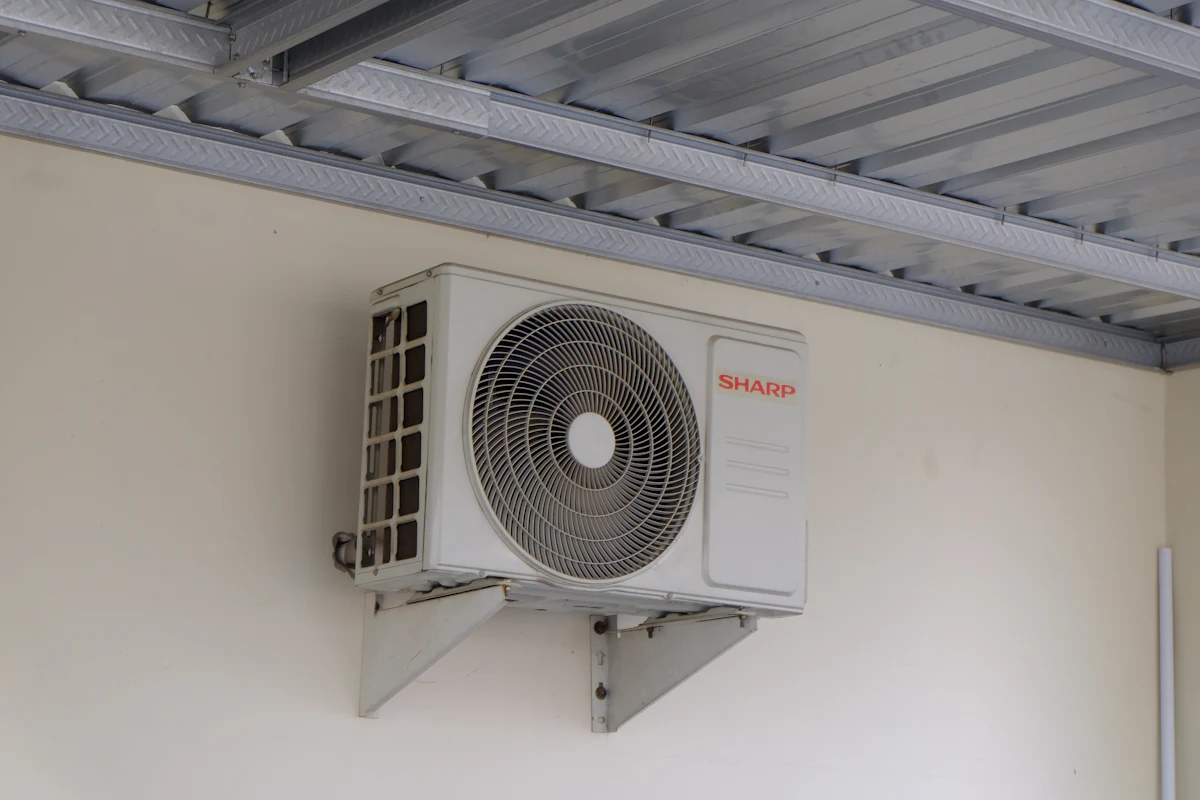
AC condensate overflows
Your air conditioner pulls moisture out of indoor air as it cools. That water drips into a drain pan and runs out through a condensate line. Air conditioners here run for much of the year, so that line handles a lot of water.
A clogged condensate drain line is the most common cause of AC water damage in Arizona homes. Algae, dust and hard-water scale build up in the line until the pan overflows into the ceiling, closet or wall. Other causes include:
- A rusted or cracked primary drain pan
- A float (safety) switch that failed or was never installed
- A frozen evaporator coil that melts all at once
- A disconnected or poorly sloped drain line
Our guide to AC condensate line overflows covers how to spot and prevent them.
Roof leaks and monsoon storms
Monsoon storms bring sudden heavy rain and strong winds between June and September. Water gets in through cracked tiles, worn underlayment, flashing around vents and rooftop AC units, and flat-roof seams. Roof leaks often show up as ceiling stains days after a storm, once the attic insulation is saturated. A roofer repairs the roof; we dry the attic, insulation and ceiling. Our roof leak water damage page covers that job in detail.
Warning signs
- Brown or yellow rings on the ceiling
- Bubbling or peeling ceiling paint or texture
- A sagging or soft area in the drywall
- Water dripping from light fixtures or vents
- A musty smell in a hallway, closet or bedroom
- Water in the AC closet or around the air handler
How we repair ceiling water damage
- Make it safe. We check for sagging drywall and water near light fixtures, and shut off power to affected circuits if needed.
- Find the source. We confirm whether the water came from the AC, the roof or plumbing, and tell you which trade fixes it.
- Check the attic. Wet insulation is removed, because it holds water against the drywall.
- Dry or remove the drywall. Firm, clean-water drywall is dried in place. Sagging or contaminated sections are cut out.
- Dry the structure with dehumidifiers and air movers, logged daily. Our structural drying page explains the method.
- Repair drywall, texture and paint so the ceiling matches.
When ceiling leaks lead to mold
Attics trap heat, and wet insulation stays damp for days. That makes ceiling leaks a common start for mold. If you notice a musty smell from vents or spotting on the ceiling, see our HVAC and attic mold service.